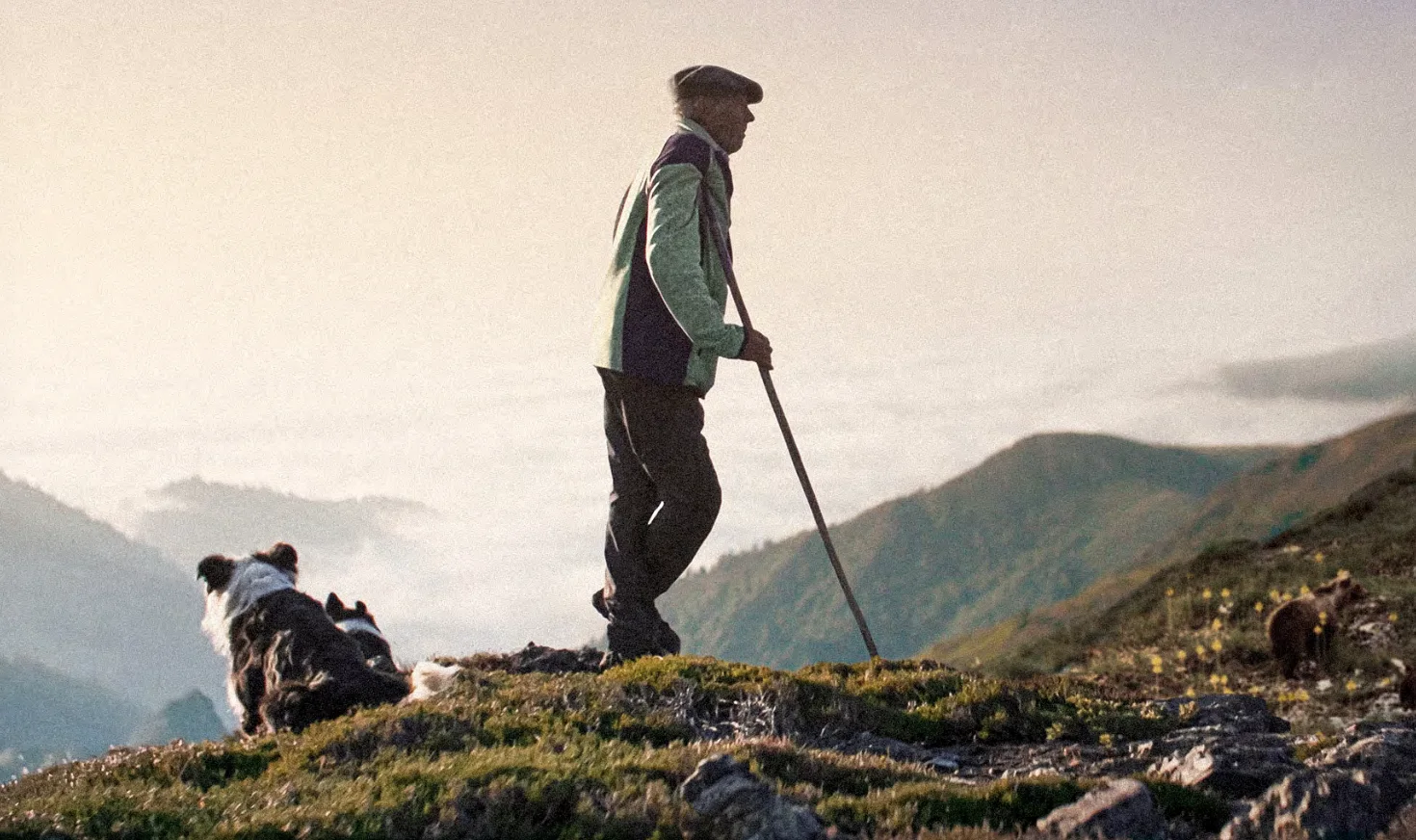
Some films take a position through argument. The Shepherd and the Bear chooses a more demanding path: it watches.
It watches animals, men, mountains, exhaustion, fear, attachment and solitude.
It watches long enough for certainty to lose some of its hardness.
In the French Pyrenees, in an Ariège rarely filmed with such visual control, Max Keegan enters a world that is too often discussed from elsewhere, from cities, ministries or televised debates.
This film stays close to the ground, in mud, wet grass, the ringing of bells and storm-dark nights.
The subject could easily have become a trap: the reintroduction of bears, dead sheep, defenders of biodiversity, exhausted shepherds, slogans on village walls, rural France feeling governed from afar. Keegan might have made a film of confrontation. Instead, he composes an anxious elegy. The Shepherd and the Bear does not deny that the bear is a danger to flocks. It does not turn the animal into a simple culprit either. The bear remains a presence, sometimes seen, often spectral, around which human passions gather. It is less a character than a revealer.
The first thing one feels is the texture of the film. It is rough, almost mineral. Bodies work, gestures repeat, days stretch out, seasons weigh heavily. Pastoral life here has nothing of the postcard. It is a profession of constant vigilance, patience and attrition. The shepherdess who gives up is moving because she is not merely leaving a job. She is leaving behind a promise, an idea of life. Her departure never feels like weakness. It feels like the quiet confession of a system that asks too much from those it supports too little.
Beside her, the older shepherd endures. He endures fatigue, fear, discouragement and the present age. His obstinacy is not spectacular. It is almost modest, which makes it all the more affecting. He continues because he loves this world, his animals, his habits, its sounds, its transmission. Passion does not rescue him from loneliness. It only gives that loneliness a shape. The film reveals this with remarkable restraint: a man may be surrounded by flocks, mountains and traditions, and still stand alone before the future of his profession.
The arrival of another shepherd, a musician, opens a more fragile variation. One cannot be certain he will stay. He seems to be searching for his place, learning, improvising, entering a life that has nothing of the romantic career change. His presence brings the film a nearly melodic note, not because it softens reality, but because it reminds us that vocations sometimes begin in uncertainty. Pastoral life is not only inheritance. It can also be a wager.
The young Cyril, an adolescent fascinated by wildlife, gives the film its clearest light. With his camera, his waiting, his patience, he shifts the gaze. He does not possess the mountain. He observes it. He does not solve the conflict. He inhabits it differently. Through him, the bear stops being only a threat or a political symbol. It becomes an animal again, a living enigma, a being that forces humans to reconsider their place. In the images he hopes to capture, in his desire to understand, perhaps the only possible way forward begins to appear: not a naïve harmony, but a form of symbiosis still to be invented.
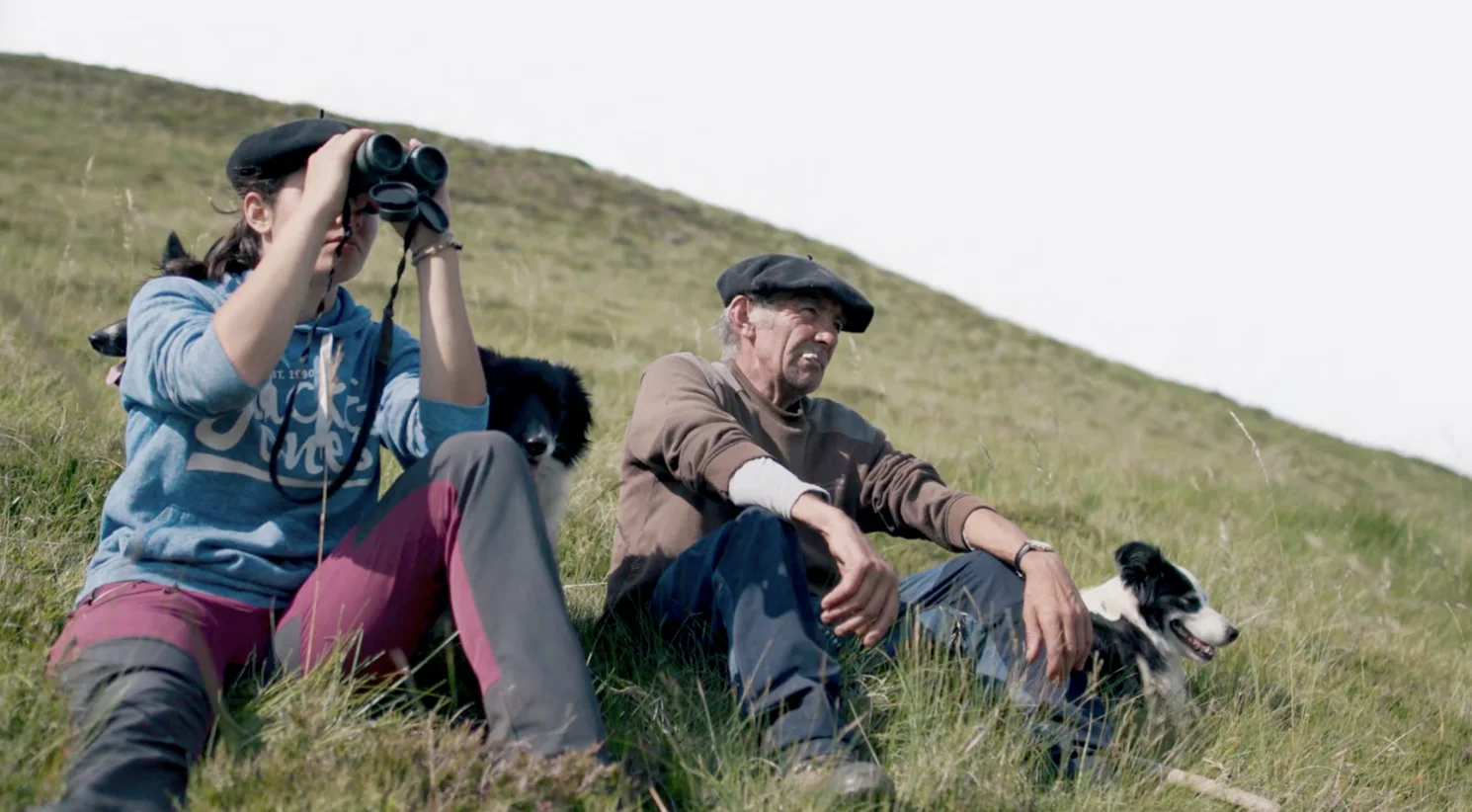
The film is powerful because it does not hide the deadlock. The preservation of nature and the survival of a noble profession seem to have been placed against each other, as if our time only knew how to protect by opposing. A truly just policy might have imagined sanctuaries, better designed zones of coexistence, dignified compensation and concrete mechanisms ensuring that the presence of the bear is not paid for by shepherds alone.
The documentary lets this idea surface without turning it into a program.
It shows the consequences of a void: when the state arbitrates from a distance, those who live closest to the problem carry the burden of compromise alone.
This political intelligence passes through form. The cinematography is striking, precise and expansive without becoming decorative. The mountains are not treated as a sublime backdrop on which human dramas are placed. They breathe, threaten, envelop. At times they seem to swallow the characters, at others to protect them. In mist, night, wide shots and silhouettes, the film becomes a kind of pastoral western, a frontier territory where the enemy is never simply the one we expect.
Sound is essential. In The Shpherd and the Bear, listening becomes a form of survival. A bell, a rustle, a silence too dense may signal disturbance. Little by little, the film teaches us that the mountain is not only seen. It is read by ear. This attention to sound gives the documentary an intimate force. It brings us closer to a world where every detail matters, where the slightest variation can mean the loss of an animal or the approach of danger.
The film’s great beauty lies in its restraint. It refuses the ease of the manifesto.
It accepts that two opposing truths can coexist: the bear belongs to the mountain, and so do the shepherds.
Wild animals must survive, and an ancient profession should not disappear in indifference.
Between these two necessities, The Shepherd and the Bear does not cut brutally. It does something more valuable: it allows us to feel the cost of not thinking together.
Raw and tender at once, Max Keegan’s film belongs to that rare family of documentaries that turn a social issue into a sensory experience. One leaves with the feeling of having discovered a region, a set of faces, a conflict, a beauty, and above all a French fatigue too rarely named. In the shadow of the bear, the film reveals the humans. Their fears, their small forms of grandeur, their stubborn effort to remain standing in a world changing faster than they can.