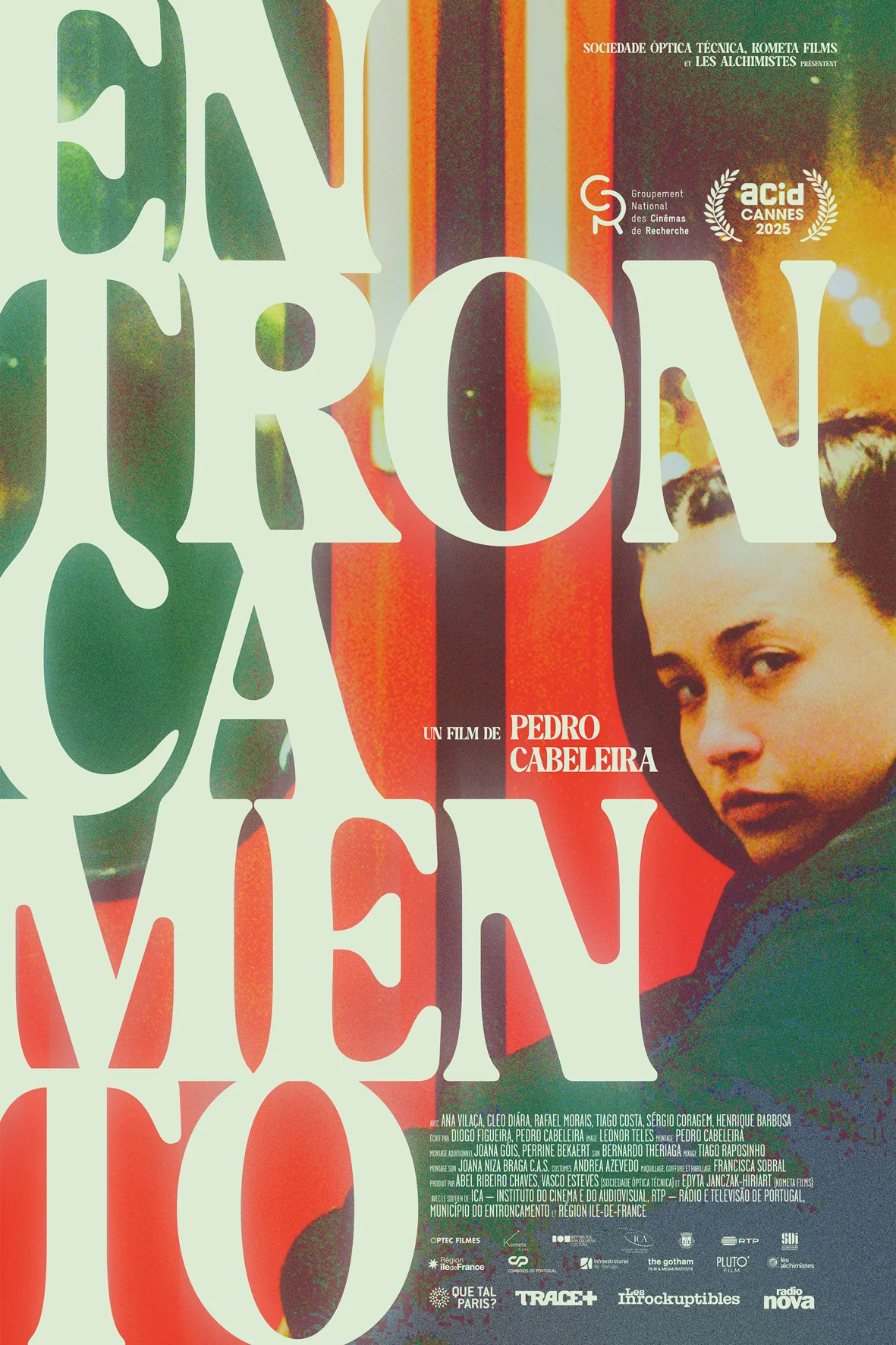
Entroncamento — Passengers of the Night
Some towns seem to have been invented so that trains may stop there without anyone ever truly getting off.
Entroncamento, in Portugal, already carries in its name the idea of a crossing, a junction, a possible bifurcation.
Laura appears not as someone arriving somewhere, but as someone fleeing something else: a troubled past, an exhaustion, perhaps an earlier version of herself. In Pedro Cabeleira’s movie, the town becomes a territory of transit, a place where bodies search for an exit, where lives are never entirely still and rarely free.
Entroncamento tells the story of Laura, who has come to this railway town to rebuild her life, before becoming involved with a disillusioned youth caught between low-paid jobs, hustles, dangerous loyalties, and the temptation of quick money. The film, starring Ana Vilaça, Cleo Diára, Rafael Morais, Tiago Costa, and Henrique Barbosa, was presented at ACID Cannes 2025.
What first strikes us is the accuracy of the acting. The faces do not underline their wounds; the gestures do not ask for our compassion. Ana Vilaça gives Laura an opacity, a hardness at times, but never a closure. She moves through the film like someone who has already understood that softness, in certain worlds, can become a dangerous luxury. Around her, the boys, the men, the figures of the street are not mere symbols of menace or urban folklore. They belong to a world where violence is not an aesthetic, but a social grammar.
Entroncamento could have become a street thriller, with its trafficking, its settling of scores, its betrayals, and its minor masculine hierarchies. All the signs of the genre are there. Yet Pedro Cabeleira refuses to film them as trophies. He does not glorify drugs, theft, weapons, or virile power. Instead, he films what these things replace: the money that is missing, the recognition one never receives, the place one is never given, the rage one eventually learns to call character.
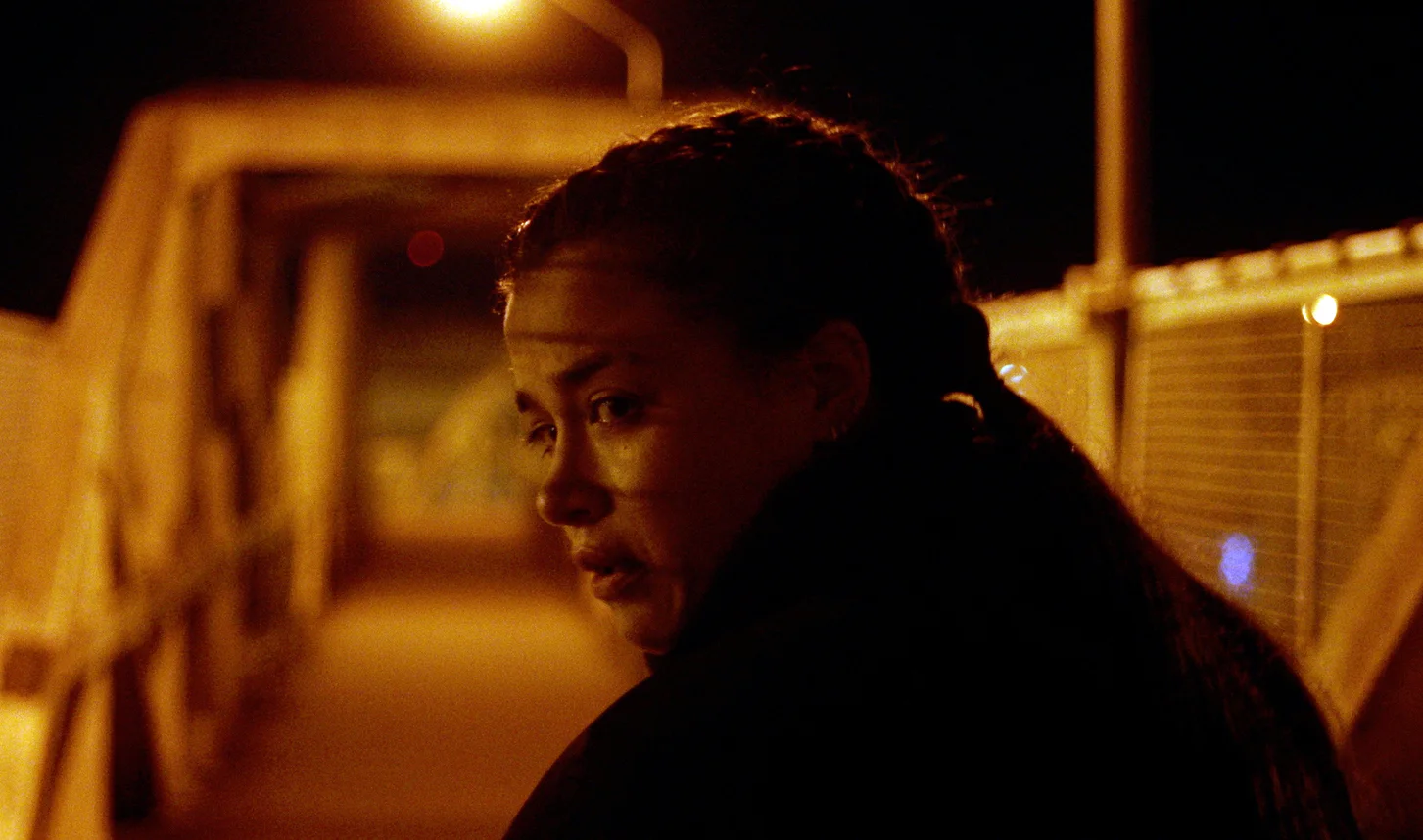
Laura has only a part-time job. Barely four hundred euros a month. This detail, almost dry, almost administrative, illuminates the entire film. It strips crime of its romantic aura. It brings it back to its social nakedness: not the call of evil, but the call of the possible when everything else has been closed. In this universe, money does not merely dictate choices; it dictates morality. It is not that Laura does not understand the boundary between good and evil. It is that this boundary, in her world, has been drawn by people who have never had to choose between surviving and staying clean.
One naturally thinks of Pierre Bourdieu, and of his notion of habitus: that set of embodied dispositions produced by socialisation, a way of perceiving, acting, and judging the world according to the position one occupies within the social space. With Bourdieu, habitus is not a mechanical prison. It does not abolish freedom, but it gives that freedom a weight, a slope, a memory. Laura never “chooses” from some abstract heaven of equal possibilities. She chooses from a neighbourhood, from a body, from a history, from an amount printed on a payslip. She chooses with the tools the world has left her.
And these tools are those of men: selling, scheming, taking risks, stealing, intimidating, learning the art of being respected. The film then becomes, discreetly but powerfully, a feminist film.
Not because it turns Laura into an exemplary heroine or a sacred victim, but because it grants her the right to the moral complexity that cinema still too often reserves for male characters. Laura is not pure conscience lost in a dirty world. She is a force learning to shift the rules, to speak the language of the street without dissolving entirely into it.
Here, Entroncamento finds its modernity. It does not try to “redeem” its heroine. It does not ask her to be likeable. It watches her take her place in a macho world, not in order to become one of the men, but to reveal, through her very presence, the fragility of their domination. Faced with her, the small-time dealers, Sunday thieves, and local toughs lose something of their splendour. Their virility looks less like power than a defensive performance. Laura, by contrast, is not pretending to be hard: she is hard because life has trained her to be.
The moments in the film that may be perceived as longueurs are precisely what give it its substance. They are not all equally necessary, but they participate in a project: making us feel the pressure of reality. At a time when many newer cinephiles expect editing to cut, accelerate, restart, and distribute peaks of intensity the way an app distributes notifications, Pedro Cabeleira prefers accumulation. He lets scenes breathe. He gives silences time to become constraints. He allows banality to thicken.
This method recalls, in places, Why Does Herr R. Run Amok?, the 1970 West German film by Rainer Werner Fassbinder and Michael Fengler, a portrait of petit-bourgeois daily life whose repetition gradually produces an explosion. Fassbinder’s film is often described as an accumulation of ordinary, almost flat scenes, slowly creating an atmosphere of suffocation before the rupture. In Entroncamento, the pressure is not that of the family living room or the German office, but that of the street, precarity, absent money, and the night that begins again. Yet the principle is similar: to show that final violence never comes from nowhere. It has been prepared by everything that seemed, at first, to tell us nothing.
In Fassbinder, catharsis opens onto an abyss. In Pedro Cabeleira, it opens onto something else. Without revealing anything, let us simply say that Laura is not led toward a dead end. Something in her shifts. The movie does not offer her a comfortable redemption, nor a miraculous social escape, but it gives her a possibility: that of no longer belonging entirely to the men around her, nor to the past pursuing her.
The beauty of Entroncamento lies in its refusal to simplify. The film does not claim that poverty makes people noble. Nor does it claim that poverty makes them guilty. Rather, it shows how poverty reduces moral space, how it forces people to invent tactics, how it turns every gesture into a calculation of survival. To leave a poor milieu is never merely a matter of “wanting to get out.” It means learning to cross invisible borders, to pay symbolic tolls, to understand codes that were never made for those who come from there. Those who watch from a distance sometimes call this ambition, sometimes delinquency. The movie shows that it is often both at once.
Pedro Cabeleira does not seek the Portuguese postcard, nor any social exoticism. He looks at streets as corridors of fate, apartments as provisional refuges, nights as places where truths become more direct. Reality is never decorative.
Entroncamento is therefore a film about a woman who understands that, in order to survive in a world built by men, it is not enough to be more moral than they are. Sometimes one must know how to use their weapons, then turn them back on them, and eventually discard them.
In the film’s finest moments, Laura is neither a saint nor a criminal. She is a passenger of the night, caught at the exact instant when the track may still divide. Perhaps this is the film’s secret heart: not to ask whether honest work can rival the call of crime, but to ask how many honest lives a society renders materially impossible before expressing surprise that its children learn how to steal.
Pedro Cabeleira signs an austere, sometimes elongated film, but one inhabited by a rare intelligence of the social. A film in which feminism passes through the troubled conquest of power, and in which the Portuguese night becomes the mirror of a poor Europe we too often prefer not to see.
Entroncamento is not a gangster movie. It is a movie about those who, having never been given the means to be innocent, still attempt to become free.
Release on July 1st, 2026