An Island Is a Peculiar Thing
Malta is wonderfully unsuited to the road movie.
You can start a car with the solemnity of someone about to cross Nevada, put on your sunglasses, tune the radio, gaze meaningfully at the road ahead — and discover, rather quickly, that the sea has lodged an objection.
Alex Camilleri seems to have understood the full cinematic potential of this geographical inconvenience.
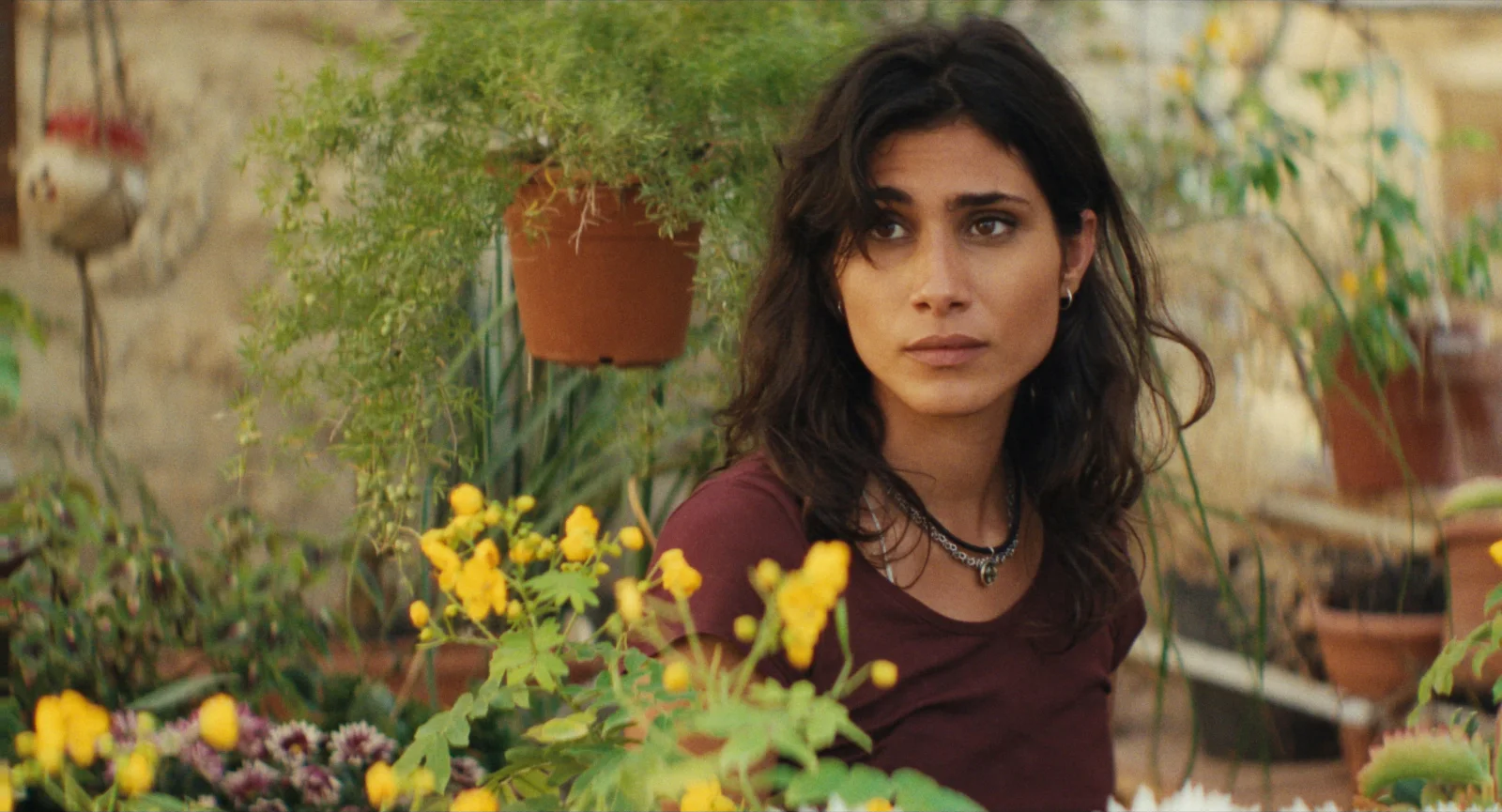
In The Song of the Olive Trees, Mar is already preparing to leave. Her mother has died, leaving her several plots of land that she intends to reclaim before, she hopes, putting Malta behind her.
The screenplay turns this matter of property into three stages, three parcels, three chapters — layers of a family history and a national one that Mar would probably have preferred to leave properly buried.
But islands have an irritating memory.
You think you are leaving.
They let you make the circuit.
Then they return you to the same door.
There is no great American horizon here into which one might disappear with a few dollars, a full tank and a complicated childhood.
On an island, essentially, you drive around until you eventually find yourself facing the person you were hoping to avoid.
That is more or less what happens to Mar.
Fortunately, she meets Nenu.
Nenu, or the Art of Not Quite Apologising
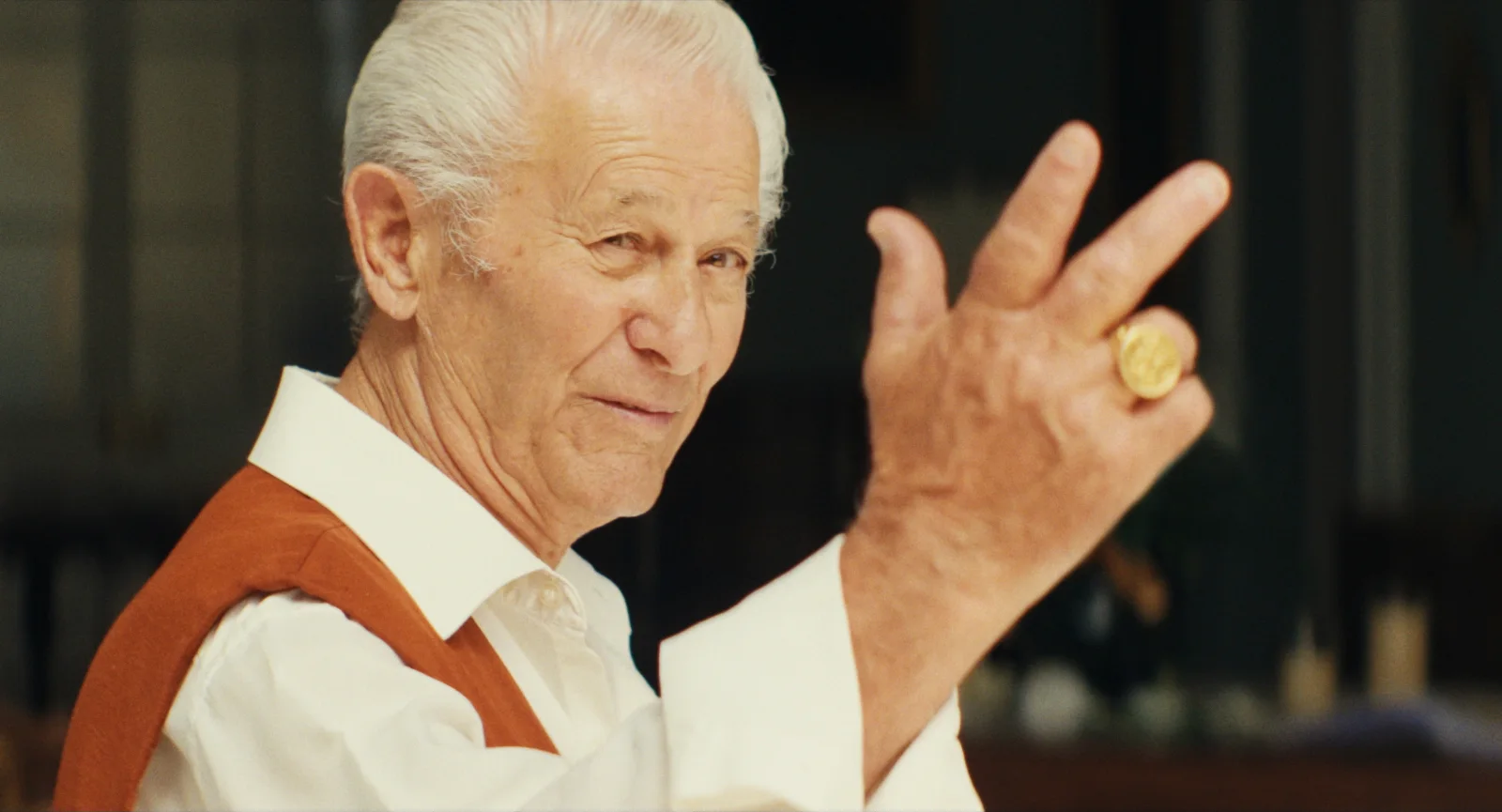
Nenu belongs to that category of older people whom our era no longer quite knows where to place.
He has the elegance of someone who stopped asking permission a long time ago, a distinctly personal relationship with the truth, and an understanding of certain contemporary conventions that fluctuates between genuine bewilderment and a simple refusal to take much interest in them.
His collision with Mar is delightful.
She belongs to a generation for whom words have consequences, behaviour carries meaning, and moral boundaries ought, ideally, to remain approximately where they were drawn.
Nenu appears to regard a moral boundary primarily as a useful indication.
He does not quite understand cancel culture and, when he eventually begins to, one suspects the discovery will make absolutely no difference to his day.
This could easily have become the mechanical premise of a generational comedy.
Fortunately, the film has more grace than that.
Mar is not a caricature of the contemporary young woman, and Nenu is not the convenient old sage brought in to explain that everything used to be better.
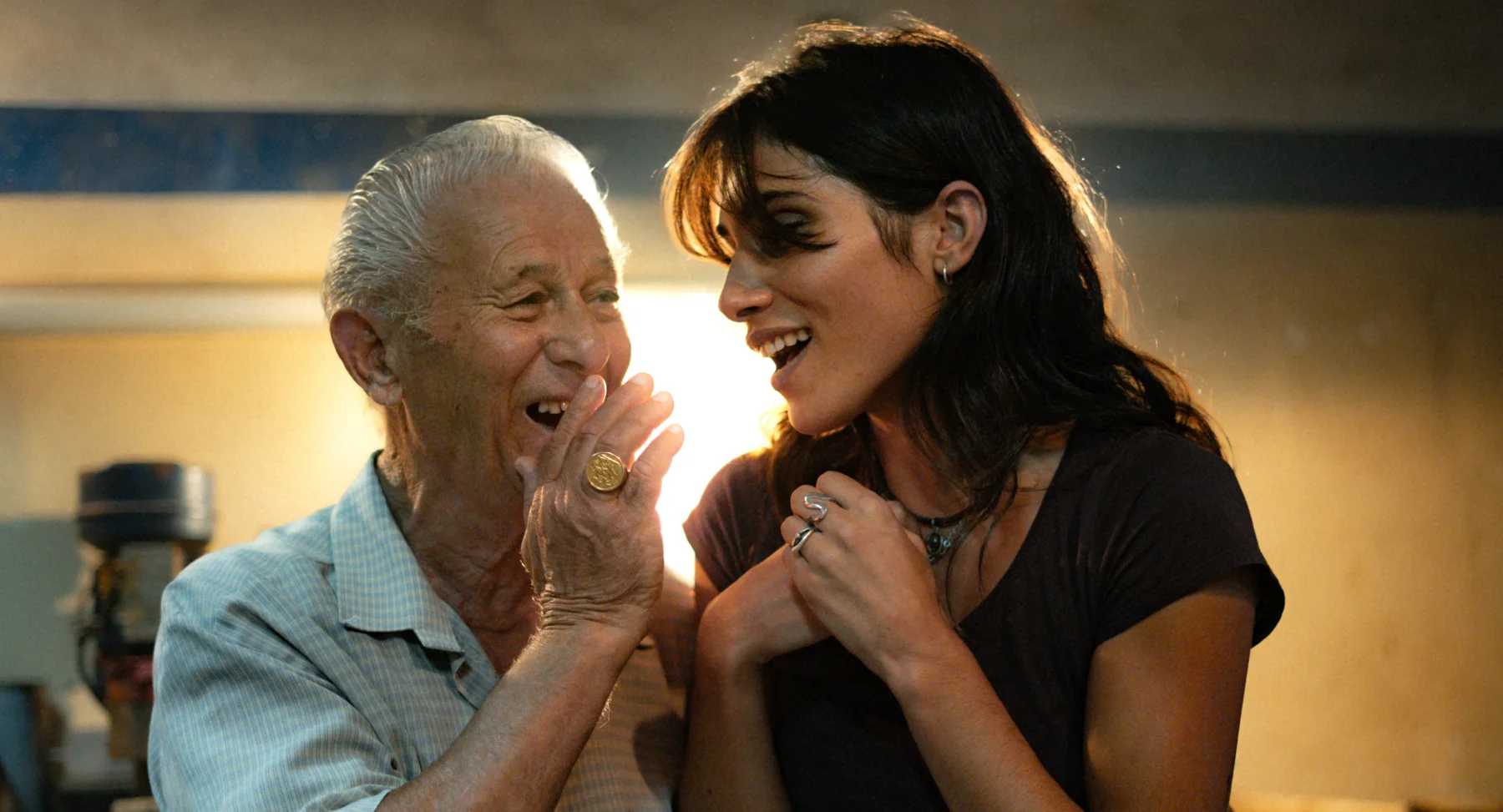
They irritate each other. Misread each other. Draw close, head off in opposite directions, return.
Their affection behaves like the tide.
Mar is also carrying the still-raw pain of a failed marriage, which Nenu approaches with a lightness that can be wonderfully disarming.
He is not always the man one would instinctively choose to lead a seminar on emotional intelligence.
Which is precisely the point.
The film does not arrange a meeting between a perfect master and an eager pupil.
It stages a collision between two incomplete people.
And that is infinitely more beautiful.
A Kind of Transmission That Recalls Cinema Paradiso
There is something of Cinema Paradiso in their relationship, although The Song of the Olive Trees never attempts to reproduce Giuseppe Tornatore’s film.
What returns is something simpler and deeper: the idea of transmission as an emotional bond.
In Cinema Paradiso, an older man passes on to a child the love of projection, images, a movie theatre — ultimately, a whole world.
Here, Nenu passes on a song.
Or rather, he allows Mar to discover that the song may already have been somewhere inside her.
Nenu Borg is not simply an actor playing an ageing singer.
He is an actual performer of għana, once known as “l-Brazz.” After roughly fifteen years away from public performance, he returned to singing for the film and, in his eighties, made his first appearance in front of a camera. Elements of his own life also found their way into the character.
That presence gives the film something even the most ingenious casting cannot quite manufacture:
the weight of a life that existed before the screenplay.
Nenu does not appear to be performing a tradition.
He seems to arrive carrying it.
Music That Does Not Ask Whether You Like It
And then there is għana.
What a peculiar thing it is.
Nenu’s singing can be shrill, wavering, rough, incisive.
At times, the voice seems to be searching for the note while knowing perfectly well where it intends to strike.
In short, it is alive.
The contrast with so much contemporary music is almost comic: that carefully tempered sonic paste designed to disturb absolutely no one, equally suitable for a first date, a car commercial or a leisurely trolley ride between the detergents and the breakfast cereals.
Għana has clearly never been subjected to a marketing meeting.
It has no interest in making your customer journey smoother.
It addresses you.
Camilleri has described discovering this popular art almost hidden within his own country, practised in bars and garages and sometimes dismissed by Maltese society as coarse or archaic.
That marginalisation was precisely what fascinated him.
One of its forms, spirtu pront — literally “quick spirit” — is based on improvised confrontations between singers.
A verbal duel in music.
Mar herself recognises its kinship with rap battles.
And suddenly what appeared ancient does not seem quite so old.
The old man and the young woman are simply speaking two temporal dialects of the same impulse:
to answer back.
A Language Suspended Somewhere Over the Mediterranean
The film must also be listened to.
Not only its music.
Its language.
To an unfamiliar ear, Maltese produces a curious effect: something seems constantly to be travelling from one shore to another.
Its intonations can feel eastern one moment, European the next, briefly familiar before turning strange again.
When sung, the language seems to gain even more relief.
In għana, the words do not float above the landscape.
They seem to rise from it.
Camilleri has said that the guttural voice of this traditional music always seemed to him as if it emerged directly from Maltese agricultural soil.
That intuition also guides the film’s movement: Mar gradually leaves the city and enters a more rural Malta, where she discovers both a culture and the fragility of the land carrying it.
The landscape ceases to be picturesque.
It becomes an archive.
Inheriting Land, Inheriting History
This may be one of the screenplay’s loveliest ideas: turning an inheritance dispute into an excuse for intimate archaeology.
Mar is looking for land.
She finds the dead.
Departures.
Secrets.
People who remember.
And people who have preferred to forget.
Each property adds another piece to her family history while uncovering a fragment of Malta’s.
The device might easily have become demonstrative.
It remains remarkably fluid because Camilleri prefers history to circulate through people.
The small story meets the larger one without fanfare.
That is often how history actually behaves.
It arrives carrying suitcases.
Leaving an Island
Anyone who knows island cultures will recognise something in Mar’s desire to leave.
There is a strange coexistence of peace and escape on an island.
You can love the wind, the nearness of the sea, the slow afternoons, the almost excessive familiarity of place — and still dream of the plane taking off.
Because an island protects you.
You want to exist somewhere else, if only to make sure that you really exist.
And once you are elsewhere, you discover that you have carried with you the very geography you thought you had escaped.
Nenu is the other version of that story.
He left too.
He came back too.
She still wants to go.
He already knows what leaving costs.
An Island Being Redrawn by Modernity
The film could easily have become a declaration against the present: authentic old singer on one side, wicked modernity on the other.
It is more intelligent than that.
Camilleri keeps the tension in the background.
The Malta he depicts is built out of contradictions: glass buildings beside decaying structures, old agriculture next to digital industries, tourism expanding as certain landscapes gradually disappear.
The film is therefore not nostalgic in any reactionary sense.
It does not ask Malta to turn itself into a museum.
It asks something simpler:
what might be worth keeping before we replace everything?
What the Olive Trees Know
The Song of the Olive Trees could have been a charming little story about a young woman learning to appreciate her roots from a picturesque old gentleman.
Fortunately, it has much worse manners than that.
Nenu lies a little.
Mar judges rather a lot.
They hurt one another.
They enjoy one another.
They sing.
They do not suddenly become the best versions of themselves.
They merely learn to see each other a little more clearly.
Perhaps that is what transmission really means.
Not persuading someone to become like you.
Giving them something alive enough that they can turn it into something else.
Nenu passes għana on to Mar much as Alfredo passes cinema on to Toto in Cinema Paradiso: not as an antique to be preserved behind glass, but as a way of inhabiting the world.
By the end, we do not simply know Malta a little better.
We understand something more of that particular contradiction of islands: the desire to leave that perhaps only truly belongs to someone who already knows what they may one day regret.
And somewhere among the honey-coloured stone, the olive trees and the wind, a voice remains — neither entirely beautiful nor particularly wise.
It is better than that.
It is still alive.