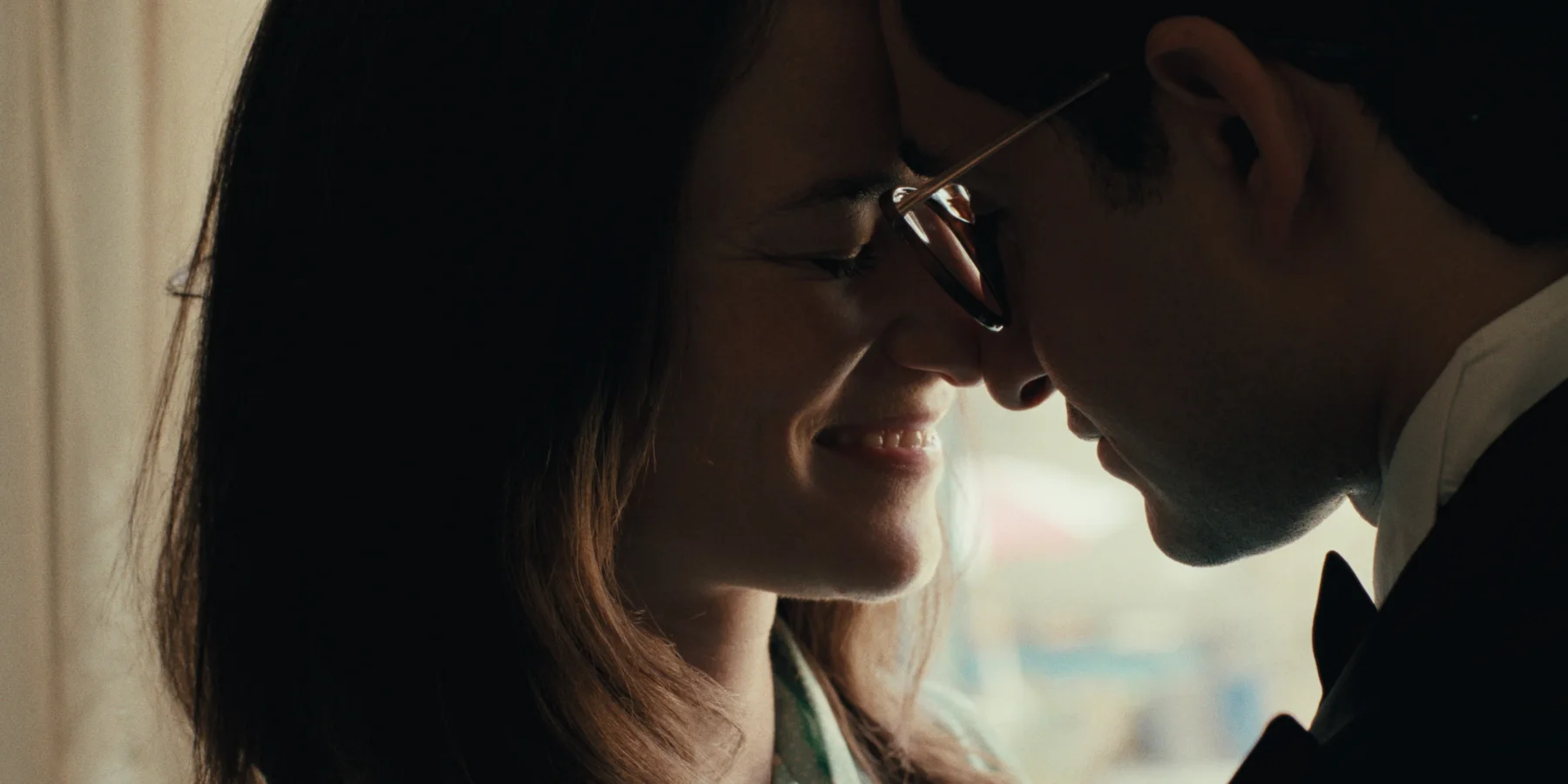
It all begins with a letter crossing borders, with a face listening, with an apartment too small for all the voices it contains, with a piano insisting inside a family that swears only by football. The Stories, written and directed by Abu Bakr Shawky, suggests that great events only become truly real when they enter through a kitchen, a living room, a bedroom, a family meal, an argument, or a love story.
Cairo, 1967. Ahmed, an obstinate pianist, receives a letter from Austria. Liz has answered his advertisement to become his pen pal. This simple gesture - writing to someone one does not know - becomes the first heartbeat of a story that will move through years, borders and political upheavals. The Six-Day War, the Sadat era, the dreams of a country, its wounds and transformations are not mere backdrops here: they move with the characters, sometimes against them, sometimes in echo of their small victories. Yet the film never allows History to crush the intimate. On the contrary, it seems to whisper that families, in their magnificent disorder, possess a memory older and more enduring than regimes, defeats and borders.
The beauty of the film lies in this idea: that love does not abolish wars, that it does not repair everything, but that it still creates a passage. Ahmed and Liz are not simply two people drawn to one another; they are two worlds learning to read each other. Their story, freely inspired by the filmmaker’s own parents, becomes a family legend - something more fragile and more powerful than an exact memory. Stories passed from one generation to the next always end up changing. What was once an anecdote becomes a myth. What was once a meeting becomes destiny. What may once have been ordinary, one day, in reality, becomes in cinema something almost miraculous: proof that souls can still recognise one another, even when the times tell them they should not.
In a contemporary moment when xenophobia sometimes returns with a disinhibited brutality, The Stories is moving precisely because it never pleads its case. It does not deliver a grand speech on multiculturalism; it films it as a human fact, with its awkwardness, tensions, misunderstandings and joys. A multicultural family is not presented as an abstract idea or a generous slogan, but as an organic reality: bodies in a room, languages crossing, inheritances colliding, children born from more than one world. The film reminds us that identity is not a wall, but a house - sometimes noisy, sometimes uncomfortable, but alive.
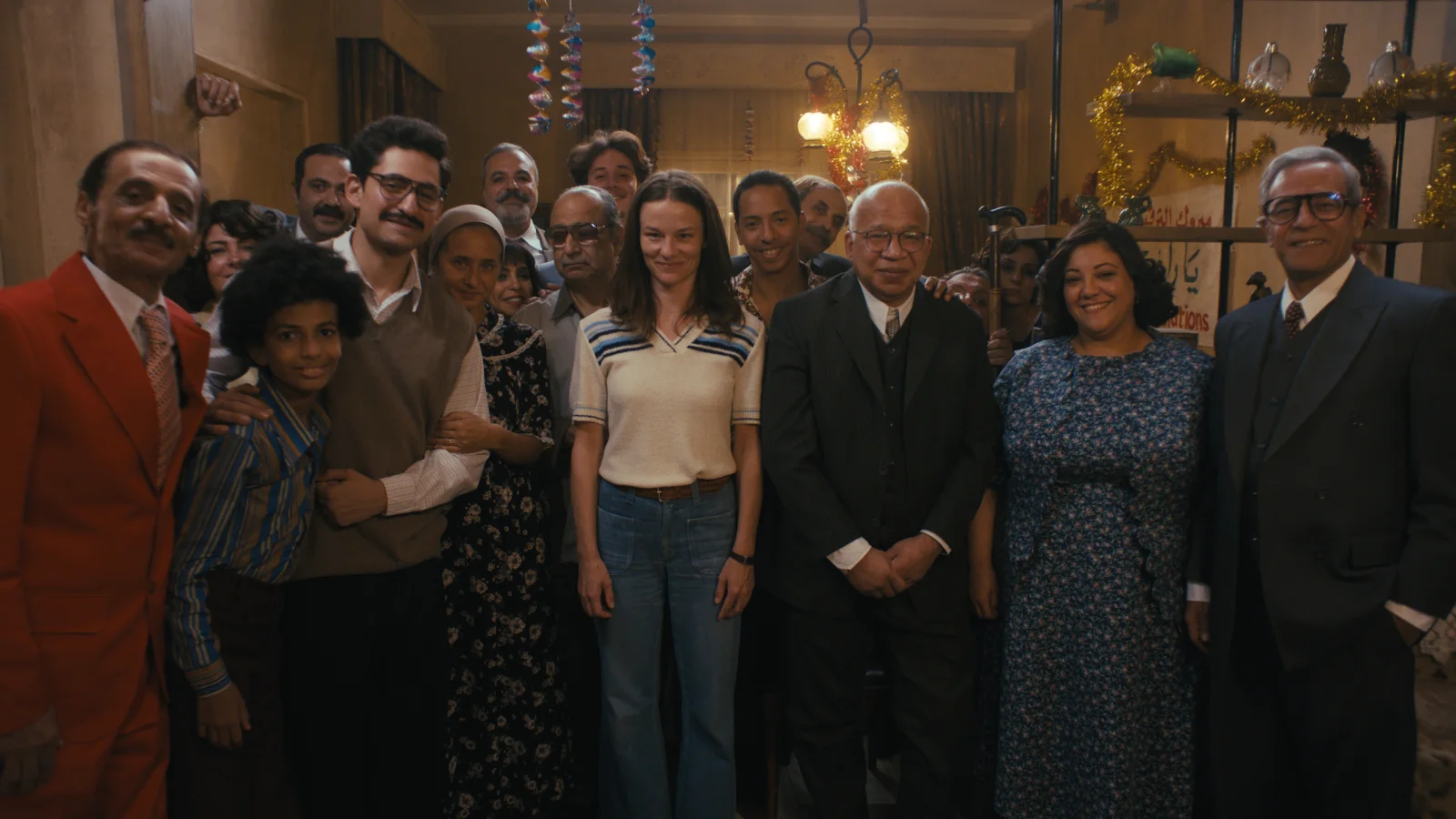
Abu Bakr Shawky’s direction embraces this vitality. The camera stays close to the faces, sometimes so close that one can almost feel the warmth of the skin, the fatigue in the eyes, the words arriving before they have even been spoken. This choice might have become oppressive; instead, it becomes a way of loving. The filmmaker does not observe his characters from afar, as figures caught in a historical fresco. He approaches them as one approaches someone known forever. The tight frames speak of cramped apartments, lack of air, permanent crowds, but also of attachment. In this world, an empty space would almost feel like a threat. The presence of others, even when invasive, is a form of survival.
One feels that Shawky loves his characters deeply, even when they are ridiculous, excessive, unfair, stubborn or loud. He does not sanctify them. He lets them interrupt, object, laugh too loudly, invade the frame. The film moves forward in a joyful chaos, crossed by voices, radio, television, music, visits, neighbours, football matches, news from the country. Everything seems too full, too fast, too sonorous.
Humour plays an essential role here. It is not decoration added to drama in order to soften it artificially; it is a strategy of survival. Tragedies often remain off-screen, held back by a discretion that makes the emotion stronger. The characters laugh because, at times, they have no other weapon. They turn misfortune into narrative, pain into anecdote, humiliation into a scene to be told later. That kind of laughter erases nothing. It merely allows life to continue.
The film also converses with the memory of Egyptian cinema from the 1950s and 1960s: its flamboyant melodramas, ample voices, warm colours and taste for popular spectacle. The light has something solar and nostalgic about it, as though it came from a time when every interior already contained its own theatre. Music, omnipresent, does not merely accompany the story: it carries it, restarts it, moves through it like the soundtrack of a collective memory.
Popular songs, hymns, concerts, fragments of radio and television compose a litany in which the intimate and the national become inseparable.
In the midst of this tumult, football appears almost as a second religion. It offers identity, loyalty, community. In a family, one sometimes inherits a club as one inherits a name, a language or a wound. Ahmed, for his part, chooses the piano. This detail might seem slight; yet it says everything about a character seeking his own path in a world saturated with expectations.
The Stories is a film about transmission, but not in the solemn sense. It knows that to transmit is also to distort. Families never hand down a pure truth: they tell, embellish, forget, recompose. Memories become chapters, chapters become fables, and fables end up containing a truth greater than accuracy. This is why the film can embrace several eras without losing its centre. That centre is the family. Not the ideal family, but the family as a place of friction, excess, tenderness and memory.
In The Stories, love is not an escape from the world. It is a way of remaining in it. A way of saying that despite the noise, despite the borders, despite the tragedies one inherits, there are still letters that arrive, faces that open, families that are built from fragments coming from several countries. Abu Bakr Shawky’s film looks at this possibility with rare tenderness.
When the film ends, it leaves behind a gentle and persistent sensation: that of having crossed not only an era but a house.
A house full of shouting, music, matches, memories, ghosts and laughter.
A house where History often knocks at the door but where life, stubbornly, keeps speaking louder.