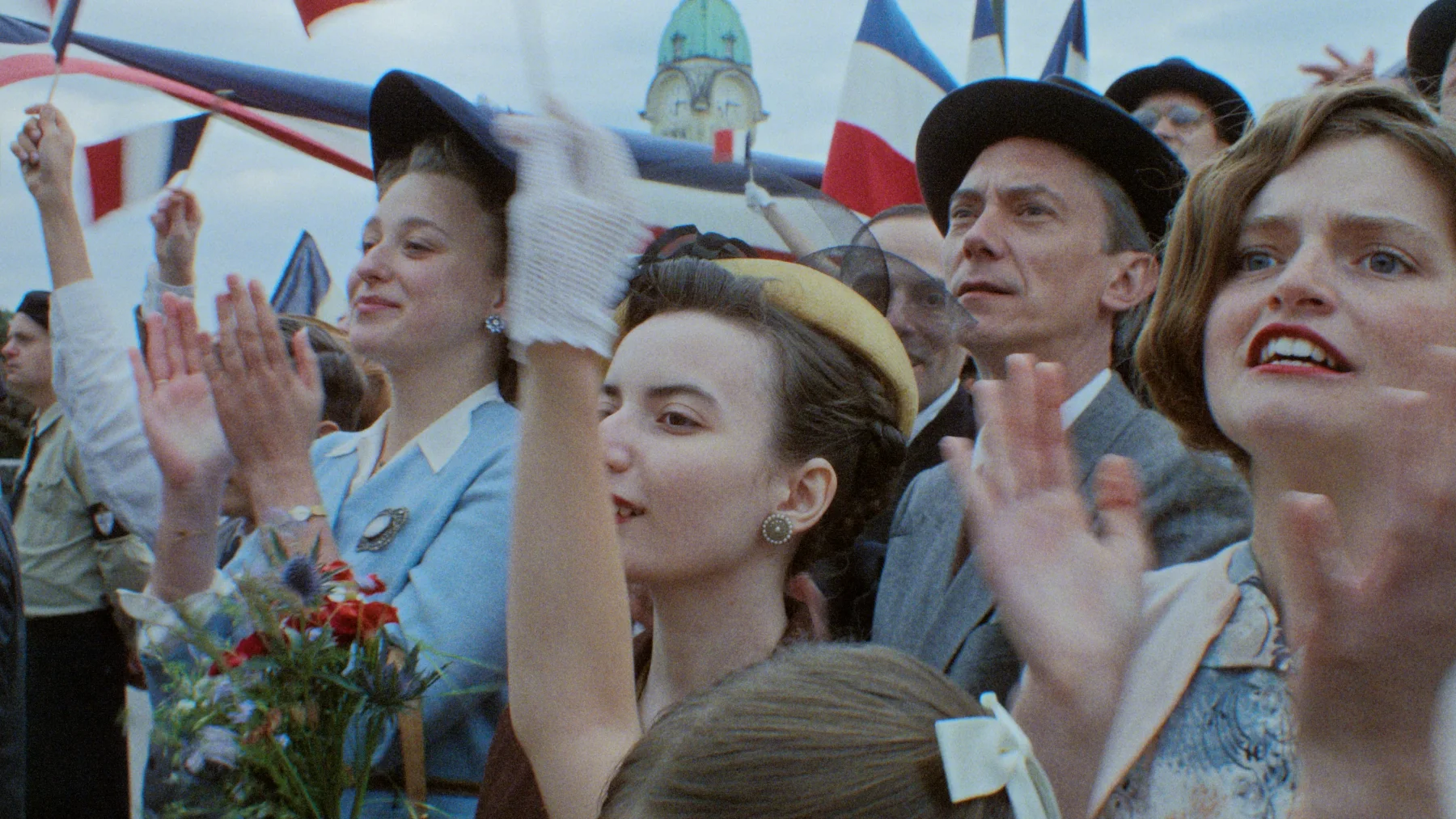
There is, in Notre salut, a light that does not wish to flatter. It falls on bodies like a theatre spotlight, or like the lamp in an interrogation room. It is not quite the sun of 1940, nor quite the light of a contemporary film set. It is something else: a clarity from after the fact, a light made of memory. It seems to suggest that what we are watching is not only an episode of History, but an intimate projection, almost familial, cast upon recovered traces, letters, silences, fragments handed down with their share of shadow.
Emmanuel Marre does not film Vichy merely as a historical setting. He films the administrative France of the Vichy regime: its offices, provincial towns, salons, corridors, and all those places where compromise can sometimes wear the dull clothes of efficiency. Between Vichy, Limoges, and this moral geography of the Occupation, the film never reaches for the picturesque. It observes, instead, the way an era installs its furniture, its forms, its phrases of circumstance and how History can sometimes enter a room without making a sound.
That, precisely, is what unsettles. The offices, the conversations, the tiny ambitions, the language of order and organisation : everything looks almost reasonable, almost administrative, almost banal. And yet it is in this banality that the film finds its vertigo. Collaboration does not appear only as a vast ideological machine. It also emerges as a promise made to those who no longer have a place, to those who have failed, to those who seek, in the national disaster, a way to repair their own private defeat.
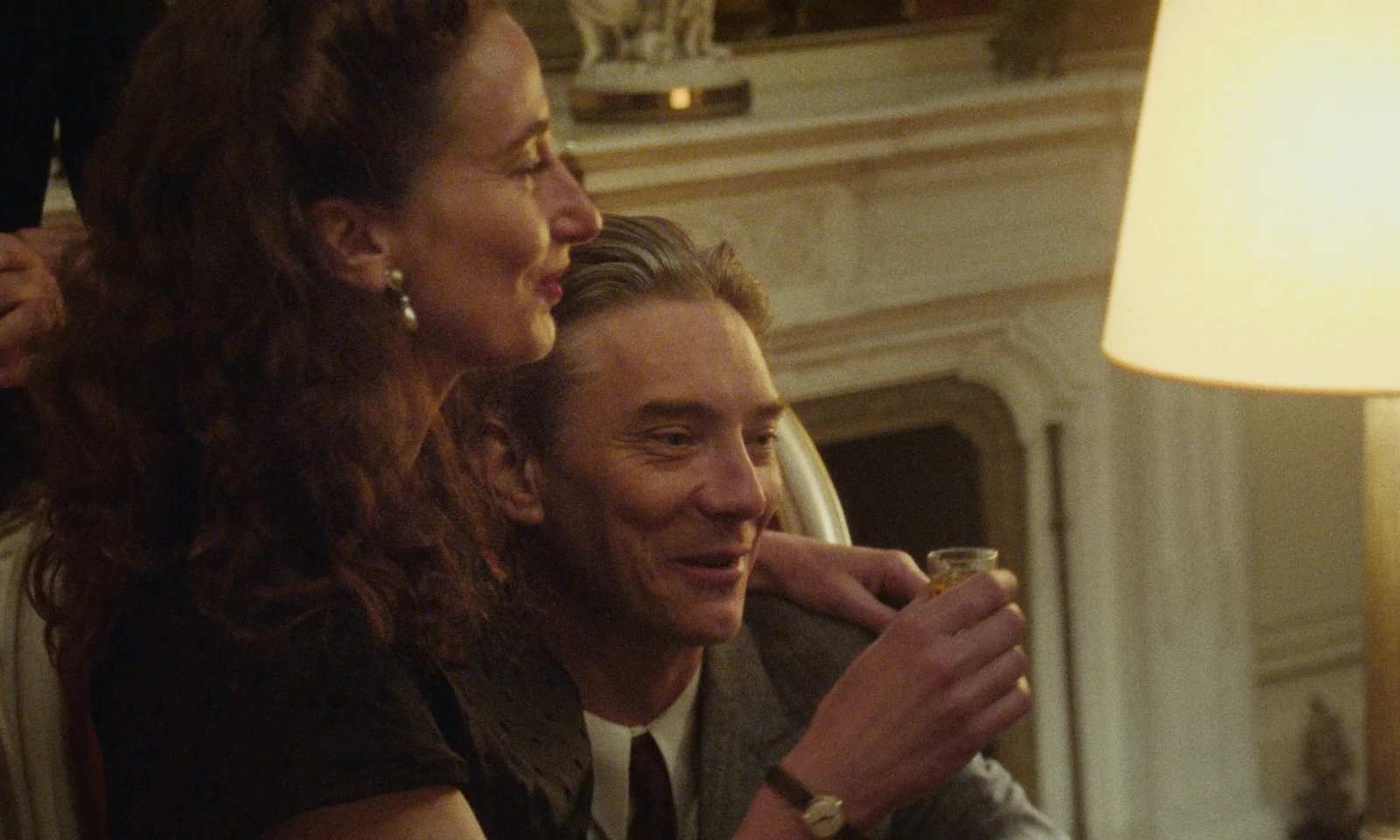
Henri Marre, played by Swann Arlaud, is one of them. He arrives with his convictions, his treatise, his desire to be useful, but also with an intimate poverty that exceeds the question of money. He wants to save France, perhaps, but above all he wants to save himself. This is where the film becomes fascinating, and dangerous in the best sense: it does not turn the collaborator into a convenient monster. It allows him to be ridiculous, fragile, loving, pathetic, sometimes funny. We laugh, and then suddenly we are no longer quite sure what we are laughing at. Swann Arlaud inhabits this zone with rare precision. He never tries to make Henri likeable, but he gives him a human density that prevents the viewer from taking refuge in an easy judgement.
This measured gaze is not absolution. Quite the opposite. By refusing caricature, Emmanuel Marre makes the fault more troubling. He shows how a man can collaborate not out of grand darkness but out of ordinary smallness; not out of genius for evil but out of a hunger for recognition; not only out of hatred but out of the fear of being nothing. The film observes these slippages as one might watch a stain spreading across a pale fabric: slowly, almost elegantly, until it is too late.
One of the great beauties of Notre salut lies in the way it binds the political to the intimate. Behind the public man, the functionary, the convinced or opportunistic Pétainist, there is the husband, the man who writes, who hopes, who still wishes to be loved. The letters, the absences, the familial and conjugal ties open another chamber within the film, more secret, more painful. Great History does not only crush peoples; it also damages couples, domestic gestures, tender words, the small dreams one believed protected from the outside world.
There are, too, the anachronisms most strikingly the eruption of Opus’s “Life Is Life” inside a story set during the Second World War. In a lesser film, such a gesture might have seemed like a flourish. Here, it opens a temporal fissure. The music does not modernise the period; it reminds us that the past is never entirely past. It sends between 1940 and ourselves the same energy of crowds, the same troubling euphoria, the possibility that people may dance, applaud, grow excited, while something irreparable is being prepared. The film does not say : look how different they were from us. It seems to whisper: look how much they resemble us.
Perhaps that is why the raw spotlight leaves such a mark. This light does not reconstruct; it summons. It does not say: this is exactly what happened. It says: this is what memory is still trying to illuminate. At times, the characters seem torn out of darkness by the very force of the family gaze. As though Emmanuel Marre, in filming Henri, were not only trying to tell the story of a collaborator, but to understand what, in a lineage, in a country, in a language, can remain buried beneath official versions.
Notre salut is a period film suspicious of period. It moves through costumes, archives, names, administrations, and yet it never allows itself to be imprisoned by them. Its deepest subject is not only the Vichy regime; it is the way an administration, an era, and a man together manufacture a moral justification. It is the way words salvation, efficiency, homeland, order can become shelters for consciences in flight.
The title itself finally turns inside out. Notre salut: the salvation of a country? Of a man? Of a family finally looking at its own ghost? Or of the viewer, invited to recognise that History does not always begin with boots and shouting, but sometimes with files, wounded ambitions, well-turned phrases, and a private misery to which a regime suddenly offers a costume.
With this film, Emmanuel Marre signs a singular work: tender and implacable, funny and profoundly uncomfortable. A film that does not seek to excuse, but to understand; that does not seek to judge less, but to look better.
The most troubling gesture may be this one: to illuminate a guilty man without extinguishing the humanity that makes his fault feel closer to us.
Notre salut, directed by Emmanuel Marre and starring Swann Arlaud, Sandrine Blancke, and Mathieu Perotto, will be released in French cinemas on September 30, 2026.