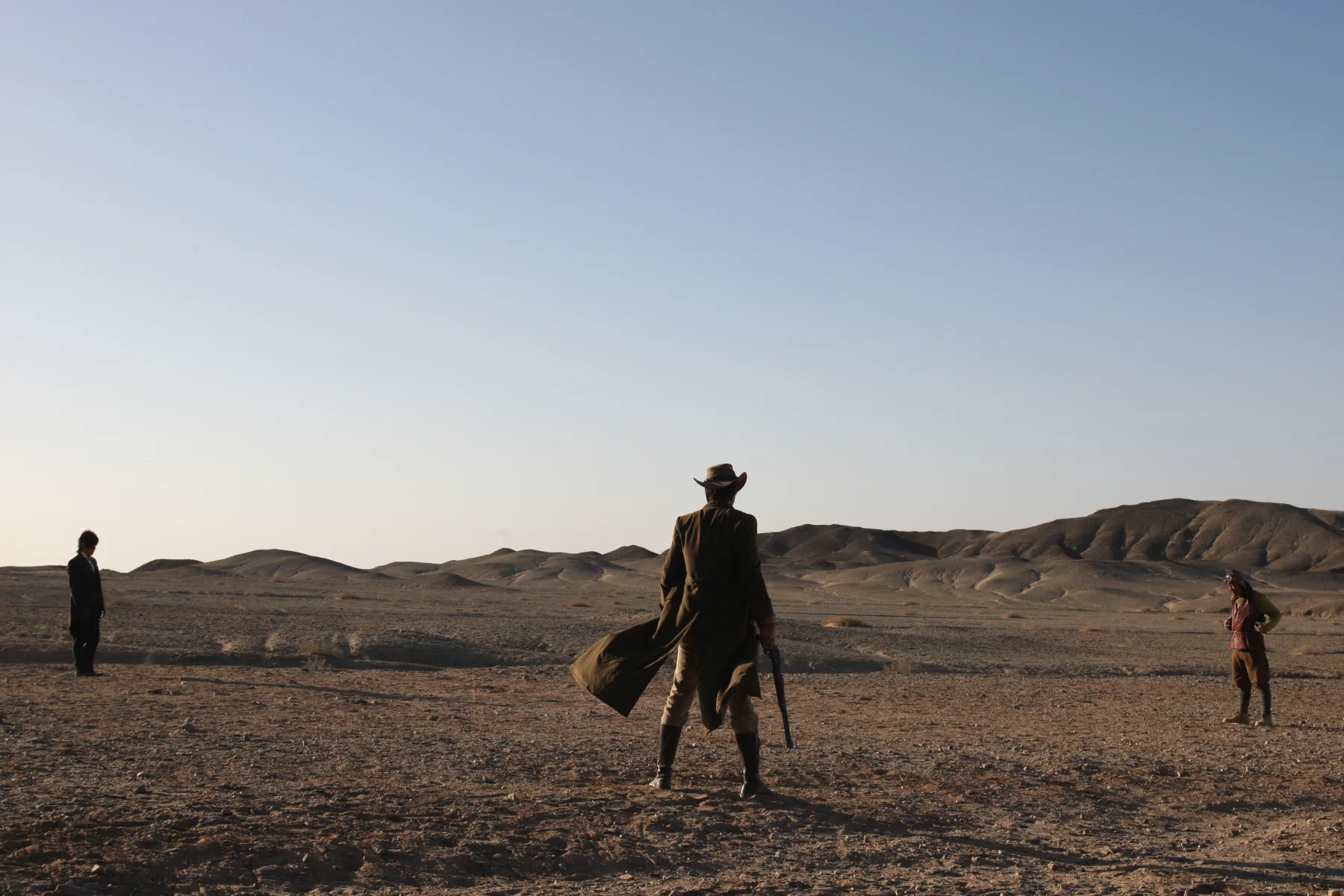
Some films quote their masters with reverence and others salute them while leaping from a speeding train.
The Good, the Bad, the Weird belongs to the latter family.
Its title, of course, looks straight toward Sergio Leone, toward that dry mythology in which three silhouettes are enough to sketch an entire world but in Kim Jee-woon’s cinema, homage is never a museum.
It is a detonation.
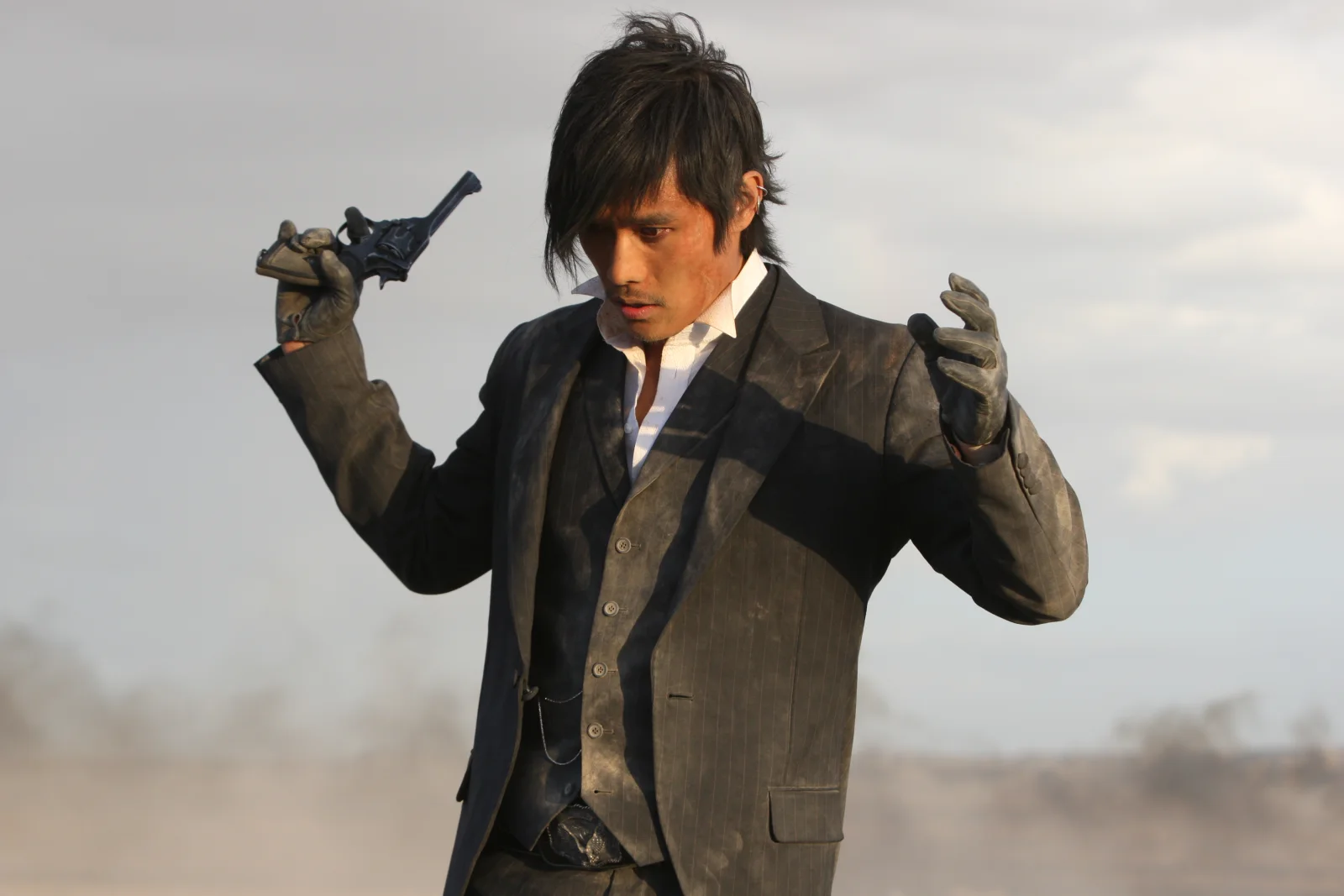
We are in Manchuria, in the 1930s. A treasure map circulates like a promise and like a curse. Around it orbit three figures:
the Good, the Bad, the Weird.
The western is there, with its horses, its dust, its sidelong glances, its deferred duels and yet something has shifted.
The desert is no longer merely American or Spanish : it becomes Korean, crossed by History, by Japanese occupation, by uncertain borders, by trafficking, languages and the ghosts of a continent in disorder.
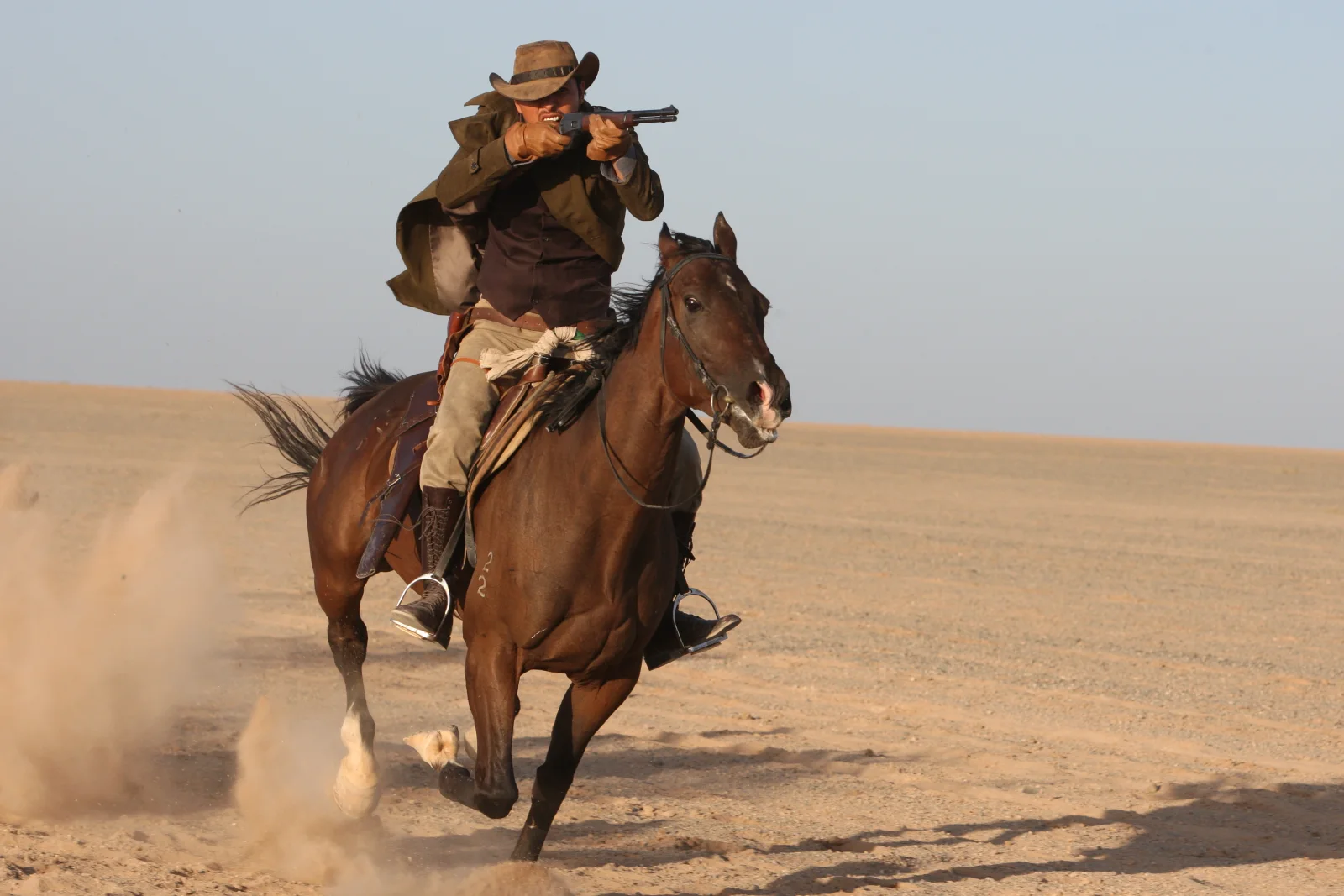
Kim Jee-woon films this confusion with an almost insolent joy. His camera does not reproduce the codes of the western, it accelerates them, bends them, electrifies them.
Where Leone stretched time to the point of vertigo, Kim hurls it into a pop cavalcade.
Bodies fall, motorcycles burst into view, bullets whistle past, silhouettes cut themselves out of the dust like a comic strip dreamed by a classical filmmaker.
This is physical cinema, almost artisanal, where action still carries the taste of risk and sweat.
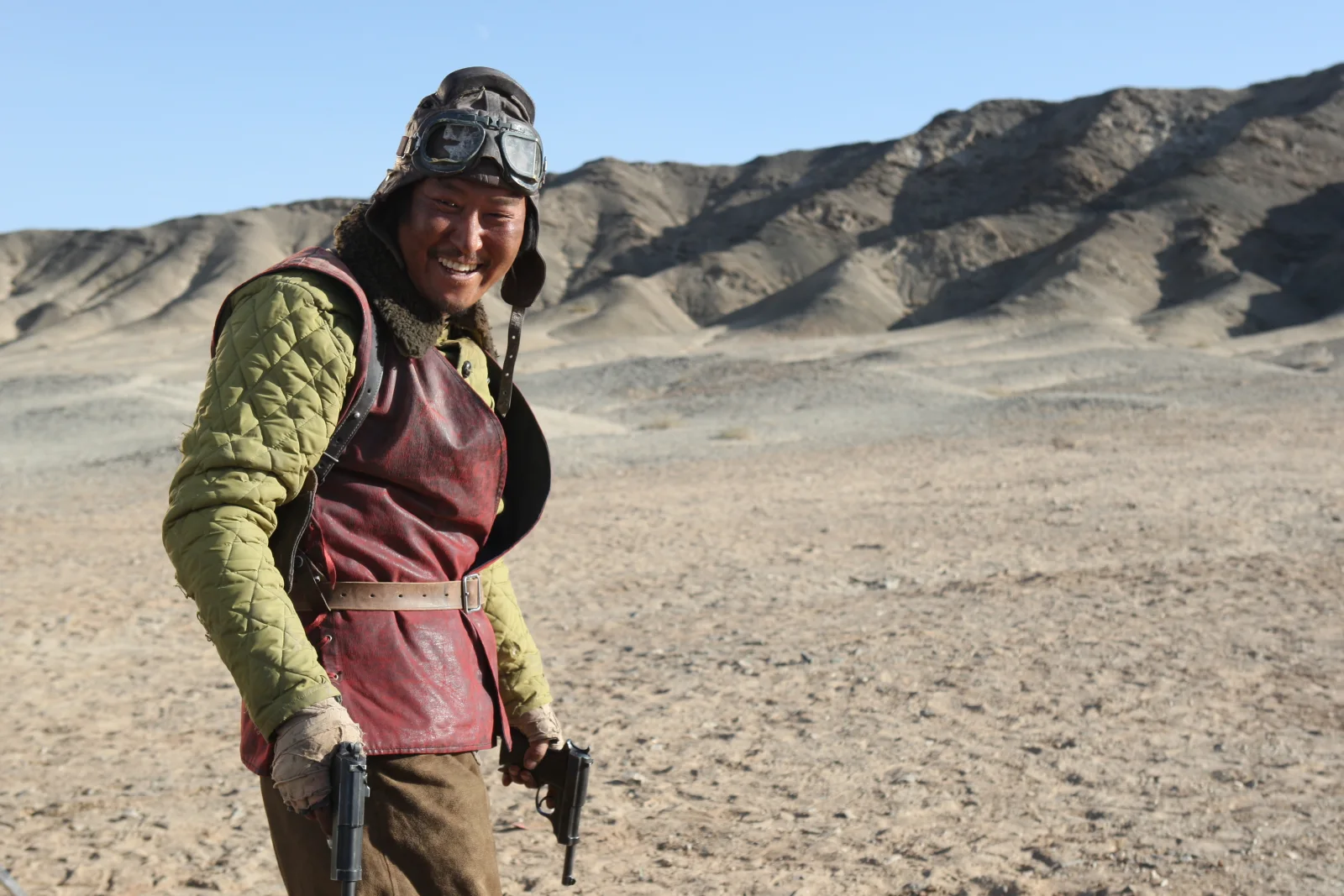
The film’s originality lies above all in its displacement. The Good, the Bad, the Weird is not a western disguised as Korean cinema, it is a Korean film that seizes the western and takes it elsewhere. In that movement, it moves beyond a Queneau-like exercise in style. It transforms quotation into living language, nostalgia into new energy, pastiche into territory.
One leaves it with the rare sensation of having watched a genre remember its past while recovering its childhood : that age when cinema could still be a map, a desert, three men racing toward the unknown and the promise that, at the end of the chase, the world would explode into color.